Outdoor Concert Power Supply Guide: Audio Power Methods, Electrical Equipment, and Safety Tips

Published on 10 April, 2026

Your Top Choice for Outdoor Event Safety: Yip Shing Offers QPME-Certified Generators and Professional Power Distribution

Outdoor concerts, weekend music festivals, and large open-air performances are becoming increasingly common in Hong Kong. From West Kowloon Cultural District lawn areas to Central Harbourfront Event Space and other outdoor venues, a stable power supply is essential for delivering a smooth event experience. In addition to stage design and performance quality, a reliable audio power supply is one of the most important parts of event planning.

This guide explains common outdoor concert power supply methods, essential electrical equipment, and important safety considerations. It is designed to help event planners, production teams, and technical staff choose the right power setup for outdoor events.

Why an Outdoor Concert Power Supply Is Important

Indoor venues usually have access to existing utility power, but many outdoor venues do not have enough electrical infrastructure to support a full concert setup. That is why temporary power supply planning is often required for outdoor concerts.

Stage lighting, LED screens, audio systems, backstage air conditioning, and other event equipment all depend on stable electricity. If the outdoor concert power supply is not properly planned, problems such as voltage instability, tripped breakers, flickering lights, or even a complete power outage may occur. In serious cases, expensive equipment may be damaged, and the safety of the audience and performers may be affected.

For this reason, outdoor concert power planning should always start early. A proper load calculation, backup planning, and safe equipment selection are all essential.

Outdoor Concert Power Supply Methods

Different venues and event sizes require different power supply methods. In general, the following solutions are commonly used for outdoor concert power supply.

1. Utility Power Connection

If the venue already has a high-capacity outdoor electrical panel, utility power may be available for the event. This is often the most cost-effective option because it avoids generator exhaust and engine noise.

However, utility power alone may not be enough for medium or large-sized concerts. In many cases, it is used only for smaller loads such as booth power, general lighting, or backstage basic equipment, while the main stage power is supplied by a generator.

2. Diesel Generator Sets

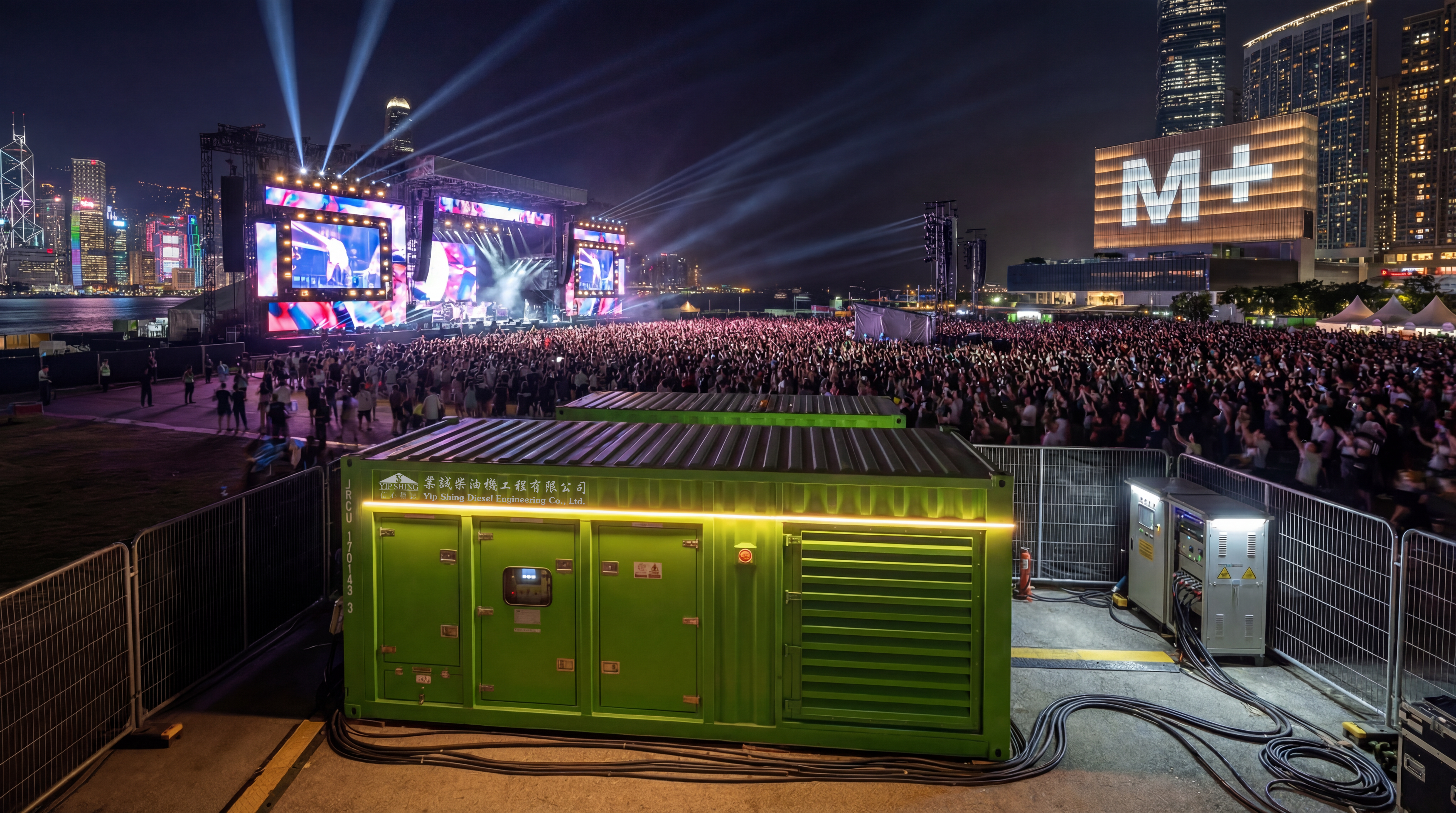
Diesel generator sets are one of the most common outdoor concert power solutions. They can be positioned flexibly according to the site layout and safety distance requirements, making them suitable for most medium and large outdoor events.

Depending on the total power load, event organizers may choose generator sets ranging from 125kVA to 500kVA or more. For larger concerts, a dual-generator parallel system or a main-and-standby setup is often used to improve power continuity and reduce the risk of interruption.

3. Battery Energy Storage Systems

For smaller events or noise-sensitive locations, battery energy storage systems are becoming a popular alternative or support option. These systems offer low-noise and low-emission power output, which makes them suitable for short-duration events or small stages.

At present, battery systems still have limits in total capacity and high-load output. As a result, they are often used together with diesel generators to reduce running time and improve overall flexibility.

Essential Electrical Equipment for Outdoor Concerts

A safe and efficient outdoor concert power system requires more than just a generator. Professional electrical equipment is needed to protect both the event and the performers.

Because audio systems are highly sensitive to power quality, the choice of electrical equipment can directly affect sound performance. Amplifiers, mixers, and digital audio devices are especially vulnerable to voltage fluctuation and unstable supply.

1. Ultra-Quiet Mobile Generators

Ultra-quiet mobile generators are commonly used for concerts and live events because they help reduce noise interference near the stage. These units are usually equipped with soundproof enclosures and improved exhaust silencing systems.

For larger concerts, the main audio system may be connected to a dedicated quiet generator. This helps reduce unwanted noise and keeps the audio environment cleaner and more professional.

2. Professional Distribution Boxes

Professional distribution boxes should always be used instead of household power strips or basic consumer-grade units. These boxes are designed for industrial and event applications and usually include residual current protection and overload protection.

In the event of a short circuit, overload, or leakage fault, the system can shut down quickly to reduce electrical hazards. A proper distribution setup also helps separate lighting, audio, and other high-load equipment into different circuits.

3. Heavy-Duty Industrial Cables and Cable Ramps

Outdoor concert cable routing often passes through walkways, work zones, or vehicle access areas. For this reason, heavy-duty industrial cables should be used, along with cable ramps or cable protection covers.

These accessories protect the cables from pressure, foot traffic, and vehicle damage. They also help reduce trip hazards for staff, performers, and audience members.

4. UPS Systems

An uninterruptible power supply (UPS) is especially important for digital mixing consoles, lighting control desks, computers, and live streaming systems. Even a short power interruption may cause these devices to restart and disrupt the event.

A UPS provides temporary backup power during a power transfer or voltage drop, helping the system remain stable. It also helps reduce buzzing, background noise, and data loss caused by sudden power changes.

Safety Considerations for Outdoor Concert Power Planning

When planning an outdoor concert power supply, safety must always come first. Even if the event equipment is well selected, poor planning can still create serious risks.

Accurate Load Calculation and Backup Design

The technical team should calculate the total power demand of all departments during the planning stage. It is also important to leave a 20% to 30% safety margin so that the generator does not run too close to full load for long periods.

For audio systems, peak power demand should also be considered. This is especially important for subwoofers and other equipment that may draw sudden high current during loud music passages.

Rainproof and Dustproof Protection

Outdoor electrical equipment should be protected from rain and dust. Power boxes and cable connections should be placed in suitable positions and raised above ground level whenever possible.

Using waterproof and dustproof equipment helps improve safety and extend equipment lifespan, especially in changing weather conditions.

Proper Grounding

Grounding is a critical part of outdoor concert electrical safety. Proper grounding helps direct fault current safely into the ground if leakage occurs, reducing the risk of electric shock.

Good grounding is also important for sound quality. Poor grounding may cause humming noise, interference, or other audio problems in mixers and amplifiers.

Rent Mobile Generators for Your Outdoor Concert

If you are planning an outdoor concert, power supply is just as important as stage design, lighting, and sound setup. Choosing the right outdoor concert power supply method can help ensure a safe, reliable, and successful event.

Yip Shing Diesel Engine Engineering Co., Ltd. has more than 60 years of experience in Hong Kong’s diesel generator industry. We provide one-stop generator rental and sales services for businesses and events of all sizes. Our fully enclosed generator units are available from our Yuen Long warehouse for fast deployment.

Our generator sets are certified under QPME and the NRMM Green Label, with power ratings ranging from approximately 40kVA to 1400kVA. We can support a wide range of outdoor concert electrical equipment and power requirements.

Whether you are organizing a large outdoor music festival or a smaller live performance, we can help you assess the total power load, especially for the audio system, and recommend the most suitable generator and electrical equipment. Delivery and technical support are also available for your event.

For a flexible, safe, and cost-effective mobile generator rental solution, visit our generator rental service page or contact us for a quotation.

Diesel Generator Efficiency and Fuel Consumption: Principles, Uses and Advantages

Published on 31 October, 2025

The principle of a diesel generator is to convert the energy released by diesel combustion into electrical power.

A reliable electricity supply is indispensable across all industries. When problems arise with the mains supply, or power is insufficient, a diesel generator serves as an emergency or even primary source of electricity. This is especially true for construction sites, large-scale events or critical facilities such as data centres, where dependable power provision has a direct impact on daily operations. This article outlines the principles, uses and advantages of diesel generators, and explains the factors influencing their efficiency and fuel consumption.

Principle of Operation

The central feature of a diesel generator lies in its effective conversion of the energy produced by diesel combustion into usable electricity. The operation takes place in two key stages:

Stage One: Diesel Engine Produces Mechanical Power

The principle behind a diesel generator is similar to that of an internal combustion engine found in vehicles. Its core is a diesel engine which generates mechanical energy through four repeating processes: Intake, Compression, Combustion and Exhaust.

1. Intake: The cylinder intake valve opens to admit fresh air into the engine.
2. Compression: The piston moves upwards, compressing the air within the cylinder and raising its temperature significantly.
3. Combustion and Expansion: At this high temperature and pressure, atomised diesel is injected into the cylinder, where it ignites spontaneously, causing a forceful explosion that drives the piston.
4. Exhaust: The piston rises again to discharge the combustion gases.

These processes repeat continuously, with the piston’s motion driving the crankshaft to rotate at a speed. This produces the steady mechanical energy required by the generator.

Stage Two: Conversion to Electricity

The mechanical energy generated by the engine is transferred to an alternator. The principle of electromagnetic induction is used: the engine rotates the internal rotor (a magnet) within a stationary set of windings (the stator), generating an electric current. This current is stabilised and regulated by a controller, ensuring a stable supply suitable for daily use.

Efficiency and Fuel Consumption

Two key indicators for evaluating a diesel generator are its efficiency and fuel consumption. How can one achieve maximum efficiency? How does one properly calculate fuel usage to keep operational costs under control? The following explains these issues:

Efficiency of Diesel Generators

Efficiency refers to the proportion of diesel’s chemical energy converted into electrical energy. Typically, diesel generators achieve a conversion rate of about 30% to 40%, depending on the model and load—It is more efficient than other types of power generation equipment (such as gasoline generators). Operating at consistently low or excessive loads can result in incomplete combustion of fuel, reducing efficiency and possibly causing damage to generator components.

Calculating Fuel Consumption

Many factors affect a generator’s fuel consumption—including unit output, load factor, engine technology and operational conditions. A commonly used formula is:

Fuel consumption (litres per hour) ≈ Power (kW) × Load factor (%) × Fuel consumption rate (g/kWh) ÷ 1000 ÷ 0.84 (fuel density)

For example, a 100 kW generator operating at 75% load with a specific fuel consumption of 220g/kWh would consume roughly:
100 kW × 75% × 220g/kWh ÷ 1000 ÷ 0.84 ≈ 19.6 litres per hour.

Larger generator sets generally achieve superior efficiency when operating at their optimum load. Selecting a generator of suitable output to meet practical needs is vital to controlling costs.

Main Advantages

Despite alternatives such as natural gas and solar power, diesel generators continue to be chosen in many sectors for the following reasons:

  • High reliability: Diesel generators can start rapidly and reach their rated capacity within seconds, providing an immediate emergency supply should the mains fail.
  • Greater fuel efficiency: Diesel has a higher energy density than petrol, providing more electricity per litre and lowering long-term fuel costs.
  • Durability and longevity: Diesel engines are robust, operate at lower speeds and experience less wear, so they typically outlast petrol engines when maintained correctly.
  • Relatively straightforward maintenance: Compared to natural gas systems, diesel generators are simpler to maintain and repair, and the necessary expertise is widely available.
  • Enhanced safety: Diesel has a higher flash point and is less volatile than petrol, making it safer to store and handle.

Two Principal Applications

In Hong Kong, diesel generators have broad applications as both standby supplies and main power sources:

Outdoor Power

Diesel generators provide dependable electricity for outdoor concerts, major events, temporary exhibitions, or construction sites not connected to the grid, enabling the continued use of equipment and preventing disruptions.

Emergency Back-up Power

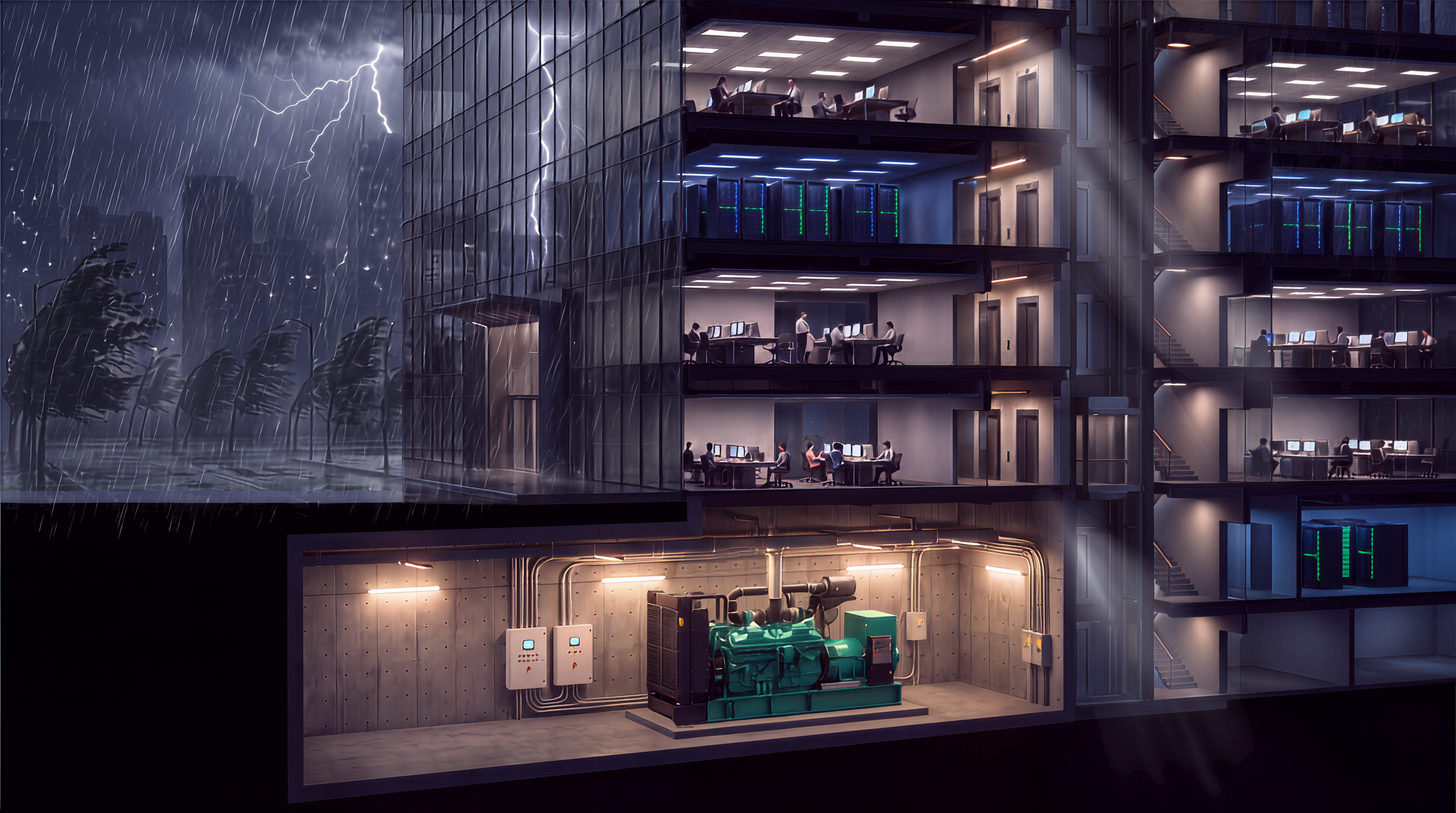
In residential and commercial buildings, diesel generators are often installed as an emergency measure to keep fire safety systems, water supplies and other essential functions operational during power outages. Facilities where no interruption to power is tolerable—such as hospitals, data centres and telecommunications stations—rely on standby diesel generators for continuous protection.

Reliable Cummins Diesel Generator Series

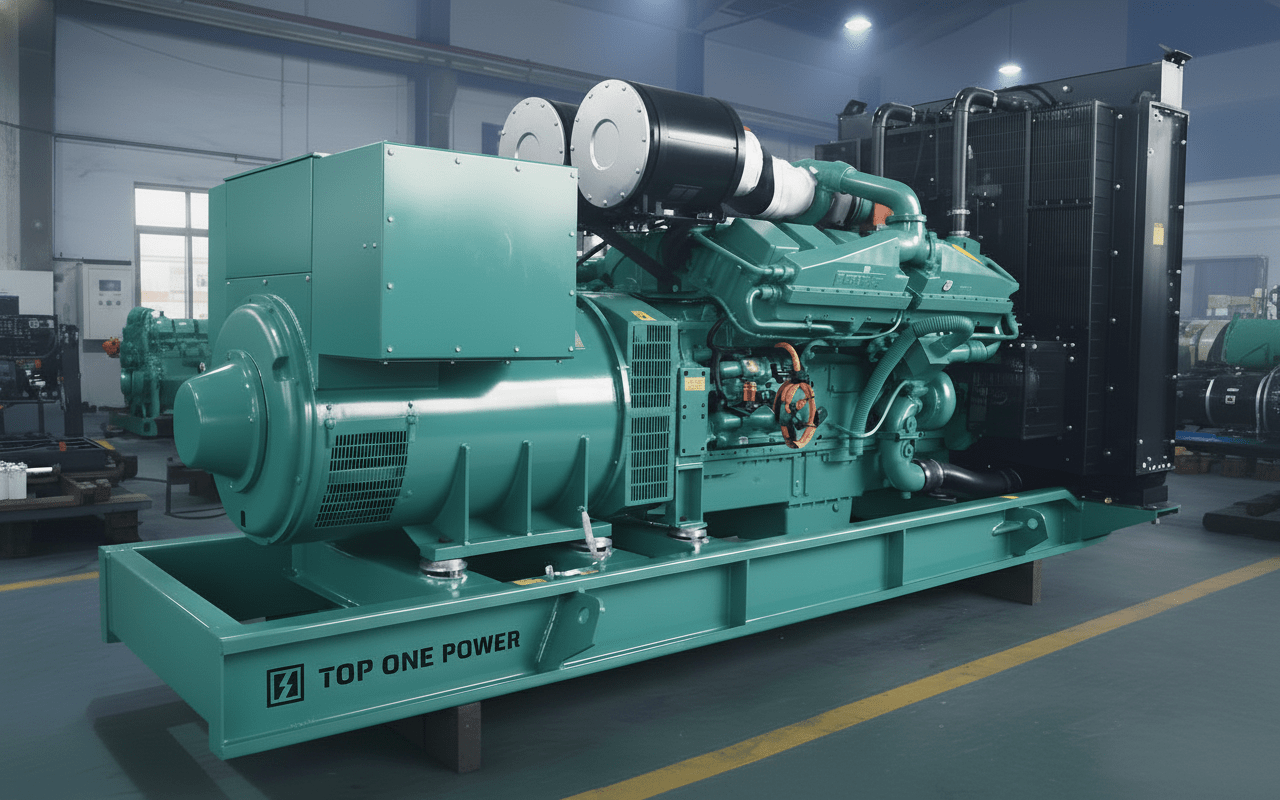
Given the efficiency and advantages diesel generators provide for both primary and back-up supply, it is important to select machinery that is reliable and established. We offer a comprehensive range of generators by Cummins®, a globally respected manufacturer with nearly a century of experience in engine design. Cummins generators are renowned for high efficiency, durability and endurance. Each unit is thoroughly tested before sale, and after-sales support is available to ensure safety and reliability. If your business requires a dependable diesel generator, please contact us for hire or purchase.

Tailored Cummins KTA38-G2A Diesel Generator Design

Published On 14 February, 2025

Tailored Cummins KTA38-G2A Diesel Generator Design

From Transport to Operation: Tailored Diesel Generator Design for Hong Kong Housing Authority

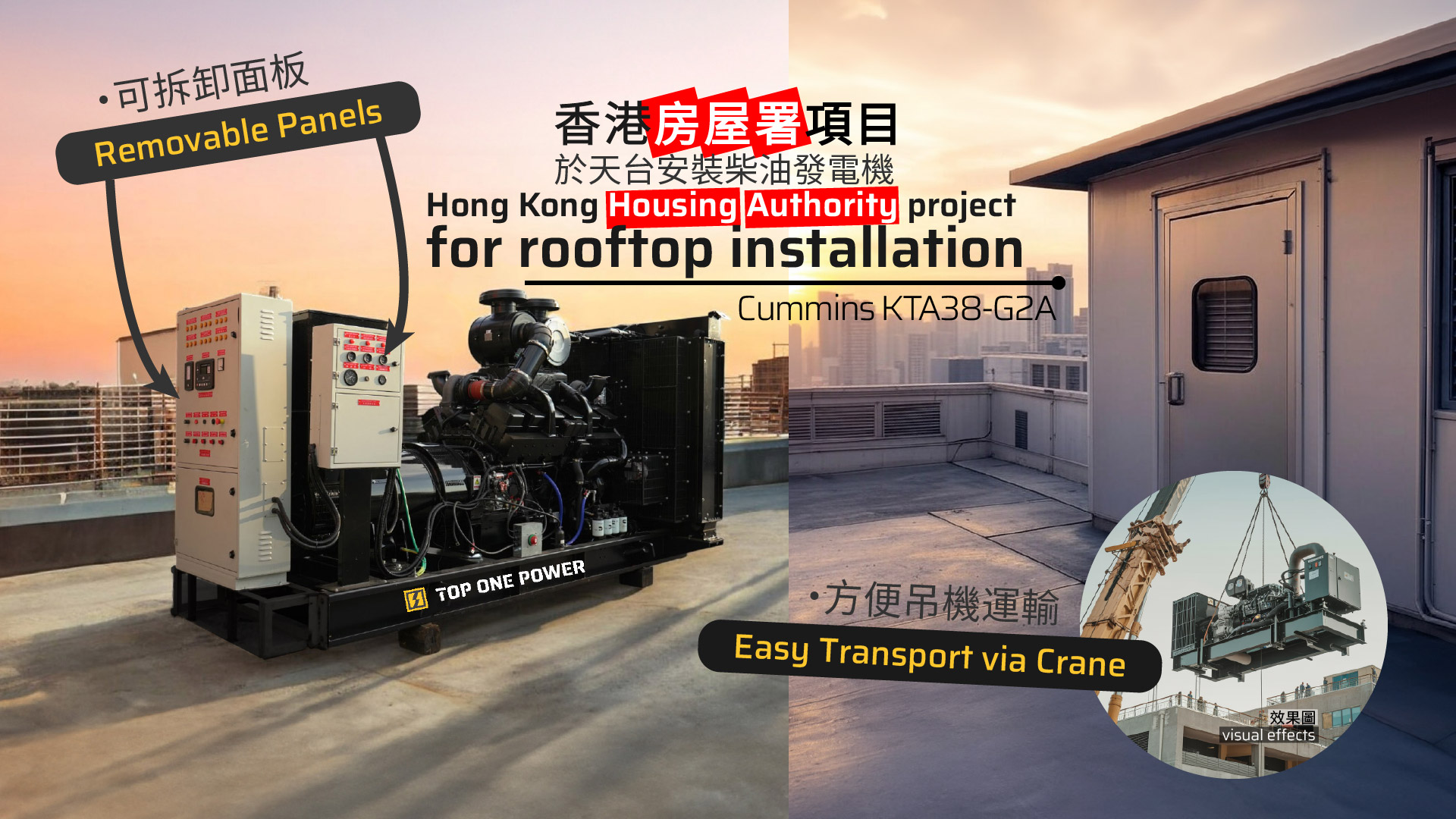
Top One Power recently contributed to a Hong Kong Housing Department project, providing customised solutions with a Cummins KTA38-G2A diesel generator for rooftop installation. To overcome logistical challenges, we designed the generator with a removable control panel box and front panel, ensuring seamless transport via crane.

When it comes to powering urban projects, flexibility and innovation are essential. Due to weight considerations, the diesel generator and the front control panel were transported separately. Our design ensured the generator met the unique demands of the Housing Department project. Key features of the solution:

  • Easy Transportation: Removable control and front panels ensure smooth transport using a crane to the rooftop.
  • User-Centric Design: After installation, the control panel will be adjusted to a user-friendly eye-level position, enabling easy operation for on-site teams.

Compliance with Hong Kong Government Standards: Rigorous Function Testing

In addition to innovative design, the Hong Kong Housing Department mandates rigorous “Strict Function Tests” to ensure generators meet uncompromising safety and performance standards, particularly in high-density urban environments. Top One Power conducted a series of specialised tests tailored to these demands, including:

  • Alternator Isolation Test (Megger Test): This test verifies the insulation integrity of the generator’s alternator windings using a high-voltage Megger instrument. By measuring insulation resistance between windings and ground, this test ensures no current leakage or short circuits that could compromise safety.
  • Emergency Stop Test: Upon triggering the emergency stop button, the unit immediately ceased operation, confirming fail-safe protection against hazards like overloading or mechanical failure.
  • Remote Start Test: The generator’s remote activation capability, via automatic transfer switches (ATS) or control panels, was tested under simulated power outage conditions. Successful startup and stable performance underscored its readiness to provide backup power seamlessly, a non-negotiable requirement for high-rise residential complexes.

These tests not only meet regulatory benchmarks but also reinforce the generator’s reliability during emergencies, a cornerstone of our design philosophy.

Why Rigorous Testing Matters in Urban Environments

Hong Kong’s compact infrastructure demands solutions that prioritise safety without sacrificing performance. By integrating these tests into our workflow, we ensured the Cummins KTA38-G2A generator operates flawlessly under load, withstands environmental stressors, and aligns with the Housing Authority’s zero-tolerance approach to risk. This proactive testing regime underscores our commitment to delivering solutions that exceed expectations—both technically and operationally.

This project exemplifies how Top One Power navigates multifaceted challenges—from logistical hurdles to rigorous compliance demands—to deliver resilient power solutions. Whether in Hong Kong or globally, our commitment to providing innovative power solutions remains steadfast. Contact us to explore how we can power your next project!

New QPME Rental Series: 125kVA & 250kVA Diesel Generator Sets

Published On 10 July, 2024

New QPME Rental Series 125kVA 250kVA Diesel Generator Sets, QPME Generator

Optimised for Hong Kong Market

Introducing the addition of our new rental units! These options have been approved by the Quality Powered Mechanical Equipment (QPME) and carry the green label, meeting the stringent guidelines set by the Hong Kong local regulations and environmental standards. Featuring the 125kVA and 250kVA models, these diesel generator sets offer enhanced features and improved performance. Let’s explore the exciting features of our new series!

Fast Connections with Waterproof Sockets

Featuring waterproof sockets certified by CE and protected with an IP67 rating, our rental diesel generator sets enable fast and convenient connections for our users now. With these waterproof sockets, you no longer need to connect to an external power distribution box to cater to your diverse equipment usage. let’s explore the socket configurations for each model:

125kVA:

  • 3 sockets: 16A, 3 poles
  • 2 sockets: 32A, 2 poles

250kVA:

  • 3 sockets: 16A, 3 poles
  • 2 sockets: 32A, 5 poles
  • 2 sockets: 62A, 5 poles

Apart from this flexibility, our generator sets have been rigorously tested for 20 minutes to ensure waterproof performance, demonstrating their ability to withstand rainwater and prevent corrosion.

Enhanced Efficiency with lower Fuel Consumption and Increased Fuel Tank Capacity

Our rental diesel generator sets are assembled with Cummins engines QSL8.9-G4 and QSB5.9-G3 for 125kVA/100kW and 250kVA/200kW models respectively. These engines are electronically controlled, resulting in lower fuel consumption than mechanical engines. Not to be overlooked, the fuel tank capacity of the 125kVA generator set now boasts a 50% increase from the previous 200 litres. Similarly, the 250kVA generator set has a fuel tank capacity of 460 litres, up from 400 litres. We also added security through lock and key for the fuel tank. With these larger fuel tanks and our fuel-efficient engines, you can enjoy extended operating hours and enhanced operational efficiency, reducing the frequency of refuelling.

Enhanced Accessibility for Maintenance and Repairs

To prioritise accessibility for maintenance and repairs, the fuel tank of the rental generator set is now located at the bottom, creating a larger engine room. This new configuration eliminates the need to remove the canopy for fuel-related maintenance tasks, making it easier and more efficient for clients to perform their work.

Your Partner in Power Solution

Whether you require temporary power solutions for events, construction sites, or emergency backup, our new series is designed to meet your needs efficiently and effectively. For more information, please contact our friendly sales team. Thank you for choosing us!

Our Service Promise: Rental Diesel Generators

Published On 3 November, 2023Our rental generators come equipped with remote monitoring capabilities

Our rental generators come equipped with remote monitoring capabilities, allowing real-time visibility into their status. Once any abnormalities are detected, our technical professionals can promptly address and resolve issues, preventing unexpected shutdowns leading to power outages!

Our Service Promise:
✔Remote monitoring of rental generators, ensuring a smooth flow of power.
✔We’ll be there within four hours at the quickest to address any emergencies on-site.
✔Regular site visits every two months to inspect the condition of long-term rental units.